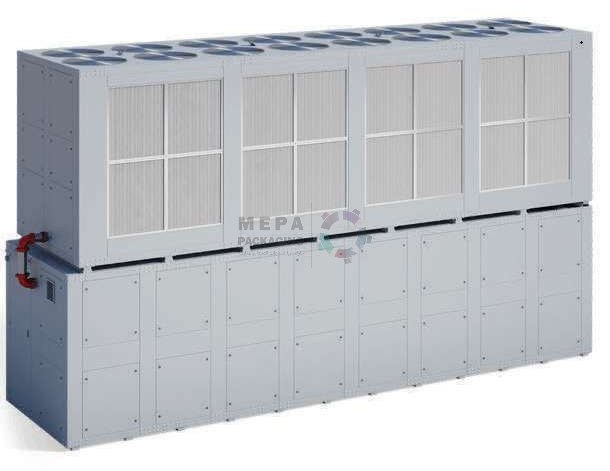
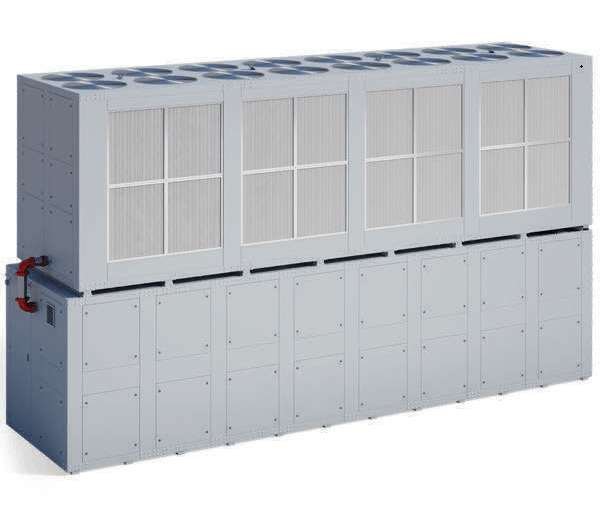
An energy-saving cooling system combines one or more chillers with one or more dry coolers to obtain maximum energy saving through free cooling.
The principle is simple and the saving is real. When the ambient temperature is lower than the required process temperature, chilled water can be produced at low energy consumption by disabling the chiller compressors and using the dry cooler alone. The compressors — by far the largest electrical load in a cooling plant — run only when the weather makes them necessary.
Two configurations are available: separate cooling units, a chiller and a dry cooler working together under one control; or a compact version with the free cooler incorporated into the chiller, for sites with limited plant space.
How much a given plant saves depends entirely on its climate and its process temperature — the number of hours per year when ambient sits below the process set point is what determines the return. That calculation is site-specific, and MEPA runs it against local temperature data and the plant's own duty profile before recommending a configuration.
Request a quote